What If the Foundations of Science Are Aesthetic Choices?
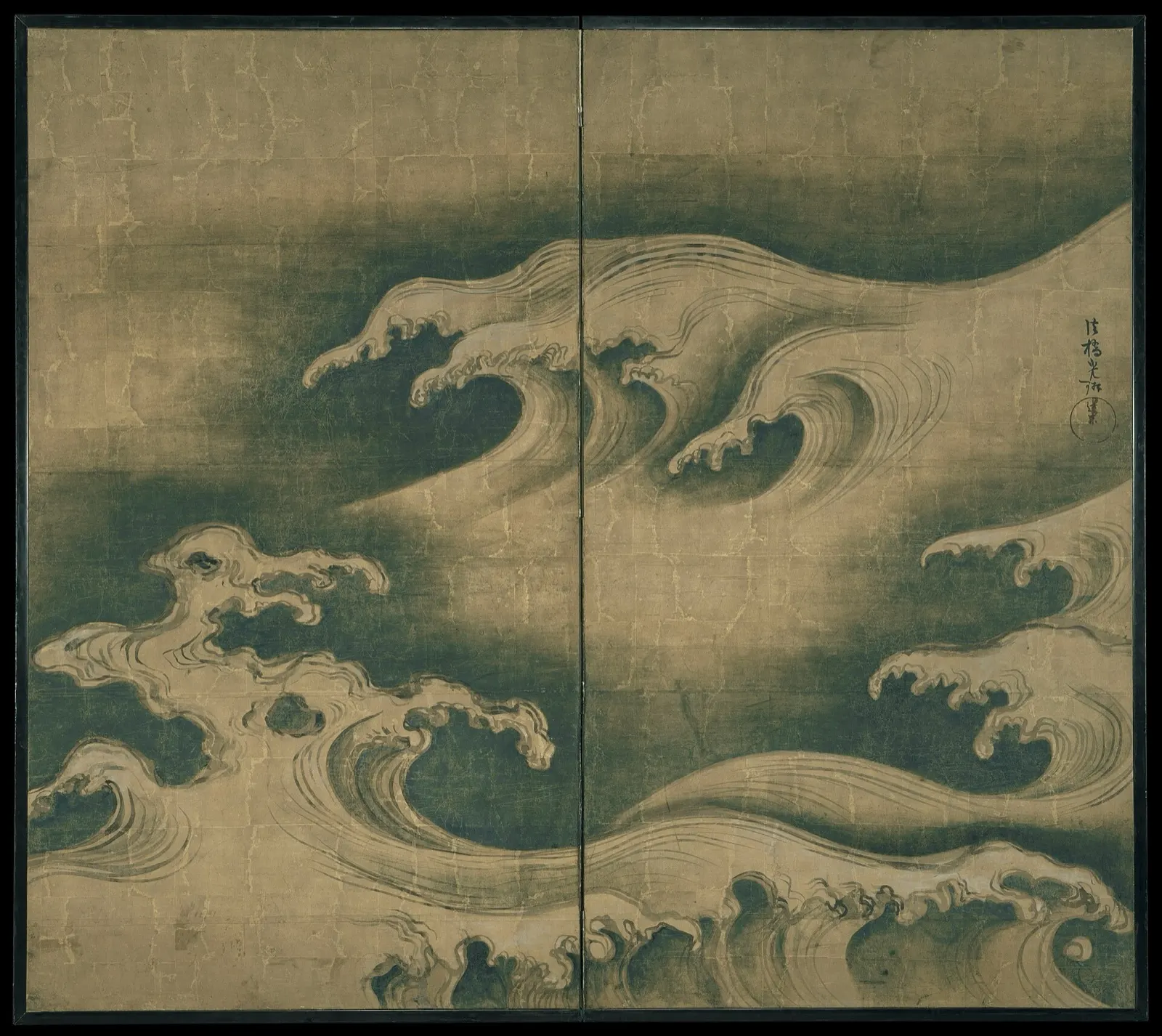

The world, an old myth has it, rests on the back of a giant turtle. And that turtle stands on another, and that one on another — “it’s turtles all the way down”. And why not? Maybe the regress really is endless; indeed, there is an important truth in this image. But you cannot do much while falling through an infinite stack of turtles; to take even a single step, you have to plant your feet on one of them and treat it, for now, as solid ground. Every system of knowledge works this way. Follow its chain of justification far enough — why do you believe this? what is that based on? and what is that based on? — and rather than hitting the true bottom, you reach the turtle you’ve chosen to stand on: the bedrock of assumptions held not because they have been proven, but because without them the inquiry could not begin.
These are what the philosopher Ludwig Wittgenstein, near the end of his life, called hinge propositions. They are not beliefs in the ordinary sense — not claims you weigh evidence for and against. They are the framework within which weighing evidence becomes possible at all. The geologist does not test the proposition that the earth is very old; that proposition is the condition under which geology makes sense. Trying to doubt it is not rigorous scientific scepticism. It is, from within geology as a practice, something closer to stepping outside the conversation entirely.
Modern science has its own hinge propositions, and they are worth trying to name — not to dismiss them, but because unnamed foundations have a particular kind of power. They shape what can be seen and what cannot, which questions feel coherent and which feel confused, without ever submitting themselves to the scrutiny they are used to apply to everything else. Something like: only measurable phenomena are scientifically tractable. Or: consciousness is produced by physical processes. Or: nature is best understood as mechanism. These are not conclusions that scientific investigation has reached. They are closer to the terms on which scientific investigation proceeds. They are the bedrock, and bedrock tends not to examine itself.
Here is where things get interesting. If you ask where these foundations come from — how the bedrock got to be there — the history of mathematics offers a surprisingly honest answer. The philosopher and mathematician Imre Lakatos spent his career showing that mathematical axioms, which look like the most rigorously logical of all foundations, are not chosen by logical necessity. They are chosen for reasons that include elegance, economy, and something that can only be described as aesthetic preference — a sense that this formulation is more beautiful, more generative, more satisfying than that one. The foundations of formal systems are, at their base, a matter of taste as much as truth. The logical structure that follows from the axioms may be rigorous and precise. The choice of axioms is a different kind of act.
Kurt Gödel, working in the 1930s, proved something that deepens this further. His incompleteness theorems showed that any consistent formal system capable of expressing basic arithmetic will contain statements that are neither provable nor refutable within that system. Undecidability is not an absolute property of a statement — it is a property of the relationship between a statement and a particular set of axioms. Change the axioms, and what was undecidable may become decidable. What was paradoxical may resolve. What was invisible may come into view. The boundaries of the knowable shift when you shift the foundations.
This is a mathematical result, proven formally, about logical systems. But it opens a philosophical question that is harder to dismiss: if this is true of formal mathematics, what might it mean for the broader systems of assumption within which scientific practice operates? If the axioms are aesthetic choices rather than logical necessities, and if changing them changes what can be seen — then the current configuration of science is not the only possible configuration. It is one particular settlement, made at particular moments in history, for reasons that include cultural inheritance and institutional momentum alongside intellectual ones. Other settlements are possible. They would not see the same things. They would also see things the current settlement cannot.
Imagine a cartographer who has been using a particular projection of the globe — Mercator, say, which preserves angles but distorts area, inflating the northern continents enormously relative to the equatorial ones. The projection is not wrong, exactly. It is useful for certain purposes and systematically misleading for others. A cartographer who has only ever used Mercator does not know they are using a projection at all. They think they are simply looking at the world. The moment they encounter another projection — Peters, or Goode’s homolosine, or any of the dozen others — something strange and clarifying happens. The familiar continents rearrange themselves. The relative sizes of Africa and Greenland suddenly look very different. Not because the world has changed, but because the terms of representation have.
Pavel’s suggestion, in a recent conversation exploring these ideas, was that moving between axiomatic frameworks could itself function as a kind of contemplative practice — a way of loosening the grip of the current framework and making visible what it cannot see. Not abandoning rigor, but noticing that rigor is always rigor within a system, and that the system has edges. Complexity science, he suggested, functioned for him as exactly this kind of permission structure: encountering a scientific framework that took emergence, self-organisation, and relational dynamics seriously made it possible to ask questions that the prior framework had rendered incoherent. The questions had always been there. The axioms had made them invisible.
There is something worth sitting with here, which is not about abandoning science or retreating into relativism. The point is not that all axiom systems are equally good, or that any foundation is as valid as any other. Some projections really are more useful than others for particular purposes. The point is that naming the projection — recognising that you are using one — is a different epistemic position from assuming you are simply looking at the world directly. And it opens a question: what might be currently invisible, not because it is not real, but because the terms of the current framework render it undecidable — neither provable nor refutable, simply outside what can be formulated as an answerable question?
This is not a comfortable question to sit with, which is perhaps why the hinge propositions of scientific practice tend to remain unnamed. Examining the foundations risks destabilising the structure built on them, or so it feels. But Wittgenstein’s own suggestion was gentler than that: you do not have to demolish the building to notice what it is standing on. You just have to be willing to look down. And looking down — seeing that the bedrock is there, that it was chosen, that it could in principle have been chosen differently — is already a different relationship to the foundations than pretending they are simply the ground.
What might scientific practice look like if it included, as a regular part of its work, the practice of examining its own hinge propositions? Not to discard them, but to hold them with the same curiosity and rigor brought to everything else? And what might become visible, or at least askable, that is currently not?