Living Through Landscapes
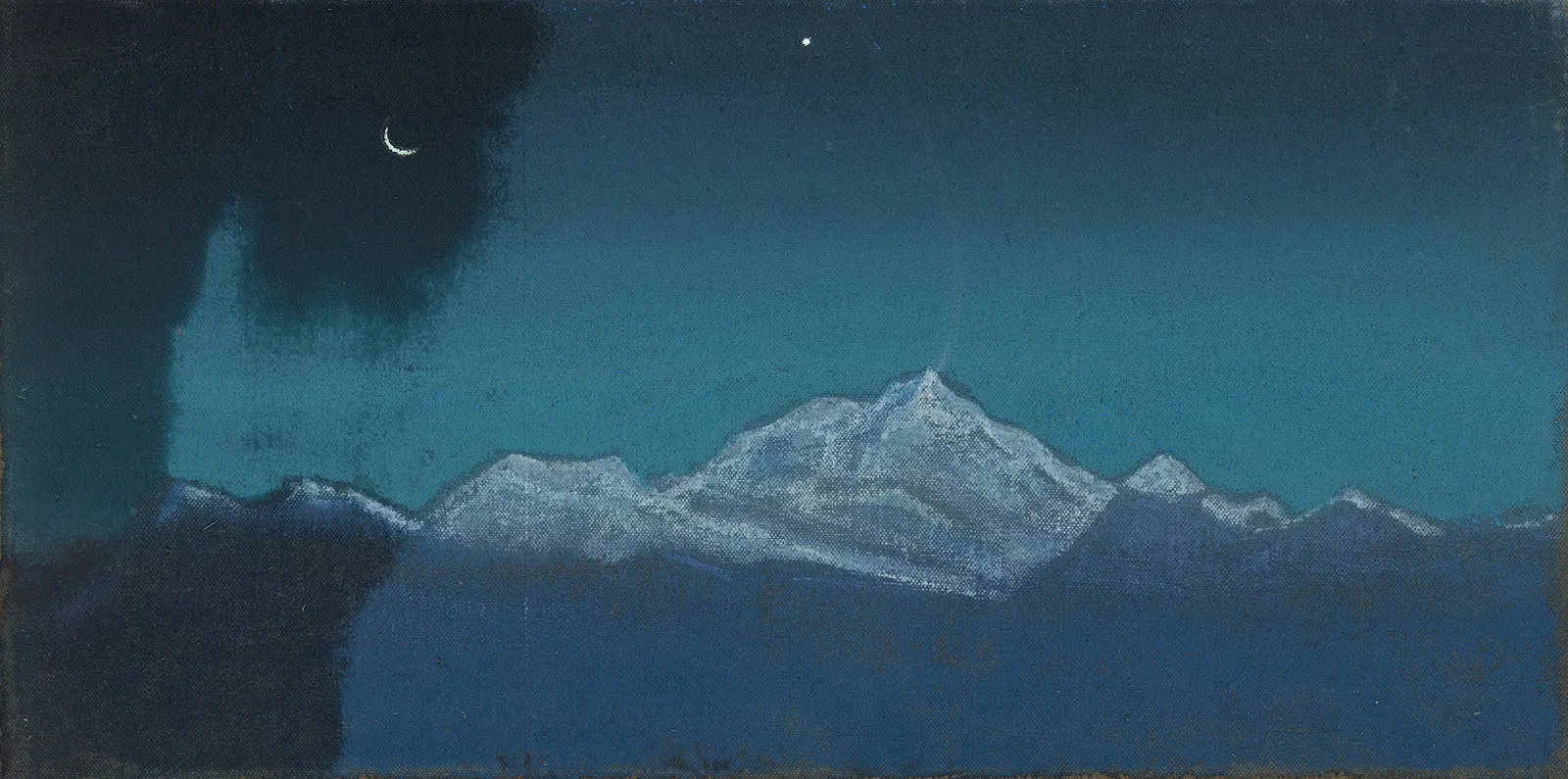

There is a valley in the Western Himalayas called Zangskar, and those who live there know it is not a neutral place. The terrain is populated by presences — spirits, powers, zones of danger — that are not decorative mythology layered over geology but operative forces with whom the community is in ongoing, practical relationship. When floods come, they are understood simultaneously as climate events, as karmic consequences, and as expressions of a landscape acting on its own terms, with its own interests and its own capacity to refuse or resist. These are not competing explanations that need to be reconciled. They are different registers of the same reality, and the inhabitants navigate all of them at once.
This is not an isolated case. Across the Himalayan Buddhist traditions more broadly, pastoralists respond to ecological danger through ritual acknowledgment of the landscape’s agency — offerings, propitiation, a formal recognition that the terrain has its own stake in what happens within it. The landscape is not a backdrop to human life. It is a participant in it, with consequences for those who enter unprepared or with the wrong relationship.
What does it mean to take this seriously — not as ethnographic curiosity but as a genuine epistemological claim?
The anthropologist Tim Ingold has spent much of his career working out an answer. His argument begins with a refusal of two pictures we tend to take for granted. The first is landscape as scenery: a surface of forms that can be viewed from outside, mapped, described, and left unchanged by the describing. The second is landscape as text: a cultural inscription waiting to be read for its meanings. Both pictures share the same assumption — that the landscape is static and that the knower stands apart from it. Ingold’s alternative is that landscape is intrinsically temporal. It is always becoming, always in process, shaped by and shaping the lives of those who move through it. A path is not just what you walk along; it is what repeated walking makes, the groove worn by feet over seasons, the way attention and terrain develop each other through long acquaintance. The fisherman does not know the sea as an object from the outside. The sea becomes meaningful terrain through the accumulated temporality of fishing — the sky-reading, the feel of the wind, the body’s memory of where fish run in which conditions. To know the sea, you have to have lived toward it over time.
Ingold calls this correspondence: a back-and-forth responsiveness between practitioner and environment in which knowledge is not achieved in the head and then applied to the world but grows in the process of engagement itself. The landscape is not raw material awaiting description. It is a co-producer of what gets known.
The botanist and Potawatomi member Robin Wall Kimmerer arrives at a similar place from a different direction. Her argument is grammatical before it is philosophical. In English, all non-human beings — plants, rivers, stones — are addressed as “it”: grammatically, they are objects. In Potawatomi, animate beings cannot be “it.” The grammar requires a different address, one that acknowledges agency and interiority. Kimmerer’s claim is that this grammatical difference is also a perceptual one. When you cannot say “it” about the aster or the cattail, you attend differently. You notice what the plant does, how it acts, what it might be offering. The land becomes, as she puts it, a first teacher — not containing knowledge but holding and offering it, in ways that depend entirely on the quality of the approach. The honorable harvest — taking only what is given, with permission, with gratitude, with reciprocal obligation — is a protocol for a kind of knowing that the extractive grammar simply cannot see.
The Brazilian anthropologist Eduardo Viveiros de Castro, working with Amazonian communities, inverts the picture even further. In the Western framework, there is one nature — the objective world — and many cultures, the different human interpretations of it. In the Amazonian frameworks Viveiros de Castro describes, the inversion holds: all beings share a common intentionality, a common relational subjectivity, but inhabit different natures — different worlds generated from different bodily perspectives. The jaguar and the human do not interpret the same world differently. They encounter genuinely different worlds from within their specific forms of embodied life. The shaman who enters the jaguar’s perspective does not imagine what the jaguar sees; he enters a different ontological register in which the terrain genuinely appears otherwise.
This is where the landscape-as-living claim becomes most radical, and also most difficult. It is not that humans project aliveness onto neutral matter. It is that aliveness — agency, perspective, the capacity to teach and to resist — is distributed across the terrain, and what any practitioner encounters depends on the orientation and grammar they bring to the encounter. Change the orientation, and you enter a different landscape. Not because you have changed your mind about the same landscape, but because the landscape you encounter is genuinely shaped by the relational terms of the encounter.
Here is where the metaphorical dimension becomes interesting, because the same insight applies far beyond field ecology or indigenous practice. The landscape of a research problem — the terrain of assumptions, values, and framings that a team brings to a shared inquiry — is not a backdrop to the investigation. It has its own zones of resistance, its own uncanny regions where something consistently refuses to resolve, its own paths that were worn before the current investigators arrived. The transdisciplinary research literature has noticed this: teams that treat their value landscape as a neutral ground to move across produce different, and usually shallower, work than those that attend to it as something alive, as something that acts on them. The resistant zone in a research programme is not necessarily an error. It might be the landscape pushing back — insisting that the question is being approached from the wrong direction, that a different grammar is needed, that something is being extracted rather than corresponded with.
The philosopher David Abram, drawing on Merleau-Ponty’s phenomenology of the Flesh, makes the connection most directly: perceptual intelligence is built from the specific sensory ecology of the place one inhabits. The particular sounds, textures, rhythms, and resistances of a terrain are not background; they are the material from which a certain quality of attention grows. Which means that what a practitioner can notice, the questions they can hear as questions, the things that catch their attention before they know why — all of this is partly shaped by the landscape that has been training their perception over time. The ground is not beneath the inquiry. In some non-trivial sense, it is inside it.
This leaves open a question the literature is careful not to foreclose. The Zangskar material is precise about one thing: a living landscape is not necessarily a hospitable one. The landscape’s agency is not always cooperative. It can refuse, resist, and act on its own terms in ways that have nothing to do with human comfort or intention. Ingold’s account of correspondence, with its emphasis on mutual attunement and developing skill, tends toward a generous picture. Buckingham’s corrective from Zangskar is important: the night-side of landscape, its uncanny resistance, its capacity to threaten those who enter without the right relationship, is as real as its generosity. A landscape that participates in knowing is not necessarily a safe one. It is a living one, which is something different.
The question this leaves us with is not whether to adopt an animist worldview or to remain within a materialist one. It is something more practical and more uncomfortable. What would it mean to attend to the landscapes — literal and metaphorical — within which our inquiries are embedded, not as passive settings but as participants with their own texture, resistance, and capacity to teach? And what might be currently invisible, not because it is hidden, but because we have been addressing the terrain as an it?