What Would a Research Monastery Look Like?

Consider what it actually feels like to do science. You sit at a desk, often for many hours. You read papers on a screen, write on a screen, submit your work to be evaluated by people you will probably never meet. You attend conferences in interchangeable hotel rooms, present findings in a format that has barely changed in a century, and return home with a stack of business cards and, if you were lucky, one or two genuinely interesting conversations. The knowledge you produce is designed, above all, to travel — to be reproducible by strangers in different labs, legible across different languages and cultures, separable from the particular person who generated it.
This is a remarkable achievement. The fact that scientific knowledge can travel like this — that a finding made in one place can be verified and built upon somewhere else entirely — is one of the more extraordinary things human beings have managed to organise. But it is worth noticing what this achievement requires, and what it quietly selects against. Knowledge that travels well tends to be knowledge that has been abstracted away from the body, the place, and the relationship in which it arose. The price of portability is a certain kind of rootlessness. And there are forms of knowing that do not survive that journey — that are constitutively tied to the conditions of their production, to sustained relationship, to the specific texture of a place and a practice and a body that has been trained in particular ways.
Michael Polanyi called this tacit knowledge: what we carry in our hands and our attentiveness, the understanding that a skilled practitioner holds but cannot fully articulate. It is not a residue of explicit knowledge waiting to be formalised. It is a structurally distinct mode of knowing, transmitted through demonstration and apprenticeship and shared practice, degraded by attempts to render it entirely explicit. A master craftsperson knows when something is right before they can say why. An experienced clinician reads a situation through her whole body before her reasoning catches up. A contemplative practitioner develops a sensitivity to inner states that no manual can fully convey. We know more than we can tell — and the institutions we have built are almost entirely organised around what can be told.
The question this opens is not whether science should become something else, but whether the spaces and practices through which knowledge is produced might be widened. Whether there is room, alongside the desk and the conference and the peer-reviewed paper, for forms of inquiry that require the knower to be differently present — more embodied, more relational, more attentive to what is happening in the room and in the body and in the specific place where the work is being done. Whether knowledge that cannot travel easily is nonetheless worth producing, and what kinds of institution might be capable of holding it.
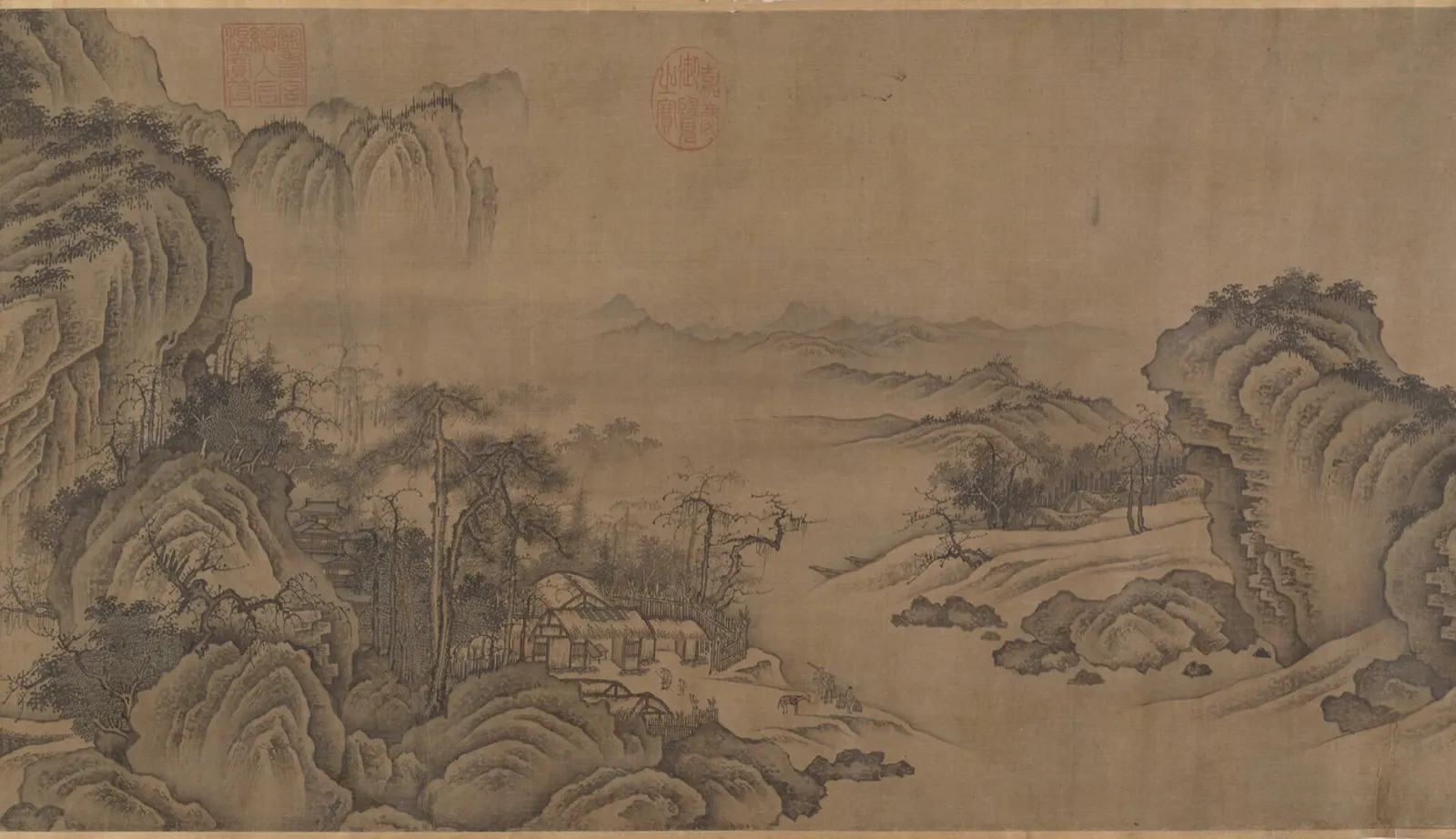
This is where the idea of a research monastery begins to feel less like a romantic fantasy and more like a genuine design question. Not a monastery in the sense of enclosure and renunciation, but in the sense of a community organised around a shared practice of inquiry — one in which contemplative formation and rigorous investigation are not parallel tracks but genuinely integrated modes of a single endeavour. Something like what Nalanda University sustained for seven centuries, integrating Buddhist contemplative practice with serious scholarship across multiple disciplines. Something like what the Benedictine tradition produced: a daily rhythm that wove together study, physical work, communal life, and a quality of attention that the institution was explicitly designed to cultivate. Places where how you knew was considered as important as what you knew.
The difficulty is that these historical models required things that are genuinely hard to replicate: physical enclosure, fixed daily rhythm, hierarchical transmission, and dense material infrastructure. They were not scalable in any contemporary sense, and their depth was in some ways a function of their restriction. The question of whether something analogous can be built that is more distributed, more accessible, and more responsive to the conditions of contemporary life is real and unresolved — and the honest answer is that nobody has fully done it yet.
Two directions tend to emerge when people take this question seriously, and they pull against each other in productive ways. One reaches toward physical concentration: a place, a rhythm, a community of practitioners in genuine proximity, doing the slow work of building shared practice over time. The other reaches toward distribution: networks of practitioners each embedded in their own local community and ecology, connected through periodic gathering and deliberate relationship rather than shared walls. Both have things to recommend them, and both face genuine limitations. The concentrated community can transmit depth but risks insularity. The distributed network can carry practice into diverse contexts but risks thinning it out as the tacit knowledge base quietly erodes without regular replenishment.
What the sociologist Mark Granovetter’s work on networks suggests is that the choice between concentration and distribution may itself be the wrong frame. Dense clusters of close relationship and loose bridging connections between communities are not competing designs but complementary functions — each doing something the other cannot. The Sufi tariqas, which sustained living contemplative transmission across vast geographies for centuries, combined both: anchoring nodes of concentrated practice and distributed networks of lay practitioners embedded in ordinary life, connected through periodic intensive co-presence. The monastery-equivalent was not where everyone lived; it was the node of depth that the distributed network oriented toward and returned to.
The practical tensions are real, though, and worth sitting with rather than resolving too quickly. Tacit knowledge cannot be scaled by making it more explicit — it requires the conditions for its transmission, which means genuine co-practice, access to people who have gone further along the path, and enough time and stability for something to actually pass between people. Digital tools can coordinate and connect, but they have not yet demonstrated the capacity to substitute for the quality of presence that genuine transmission seems to require. And the people most likely to build these networks — researchers, practitioners, people drawn to the edges of what current institutions can hold — are often also among the most mobile, the most placeless, which creates its own difficulty.
None of this means the research monastery is impossible. It means it is genuinely hard, in ways that are worth understanding precisely. What it might require is not a perfect institutional design arrived at in advance, but a willingness to experiment — to build small, to prioritise depth over scale in the early stages, to take seriously the quality of what happens when people are together in a room, and to treat the question of how we know as rigorously as the question of what we know. That reorientation, modest as it sounds, would already be something quite new.